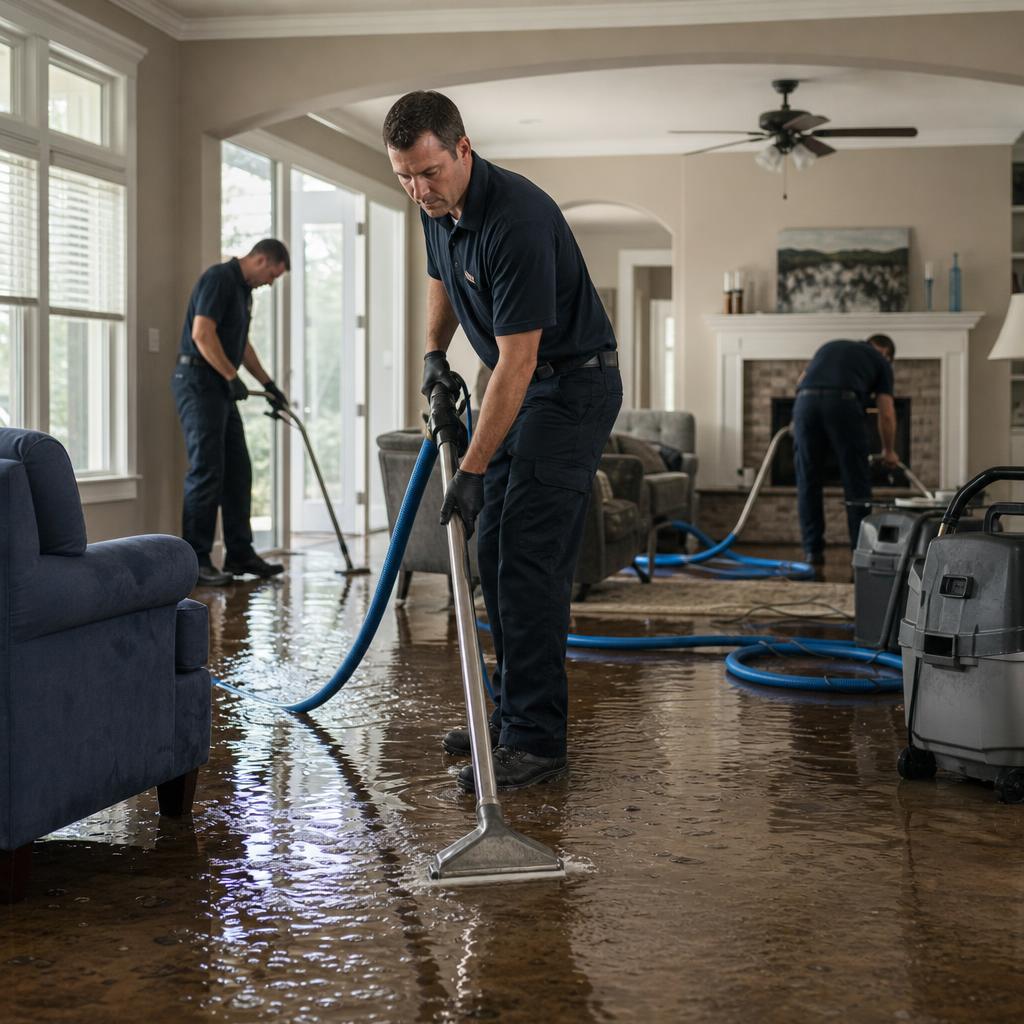
What to Know About Water Damage Restoration
Look for more than a wet spot. Cupped flooring, swollen trim, peeling paint, a musty smell, or a ceiling that changes color can indicate moisture behind finishes. A running meter, failed water heater, burst supply line, and appliance leak may continue feeding hidden damage after the visible water is gone. If rooms feel unusually humid or doors begin sticking, arrange an inspection rather than covering the symptom.
- Rapid 24/7 emergency response
- Advanced thermal imaging detection
- Industrial-grade water extraction
- Complete structural drying
- Detailed damage documentation
Our Proven Process
1
Inspection
Immediate assessment using moisture meters and thermal imaging.
2
Extraction
Pumping out standing water to prevent further absorption.
3
Drying
Deploying high-velocity air movers and dehumidifiers.
4
Restoration
Repairing drywall, flooring, and restoring your property to pre-loss condition.
How We Approach the Work
We identify the source, map moisture in affected and adjacent rooms, and separate materials that can dry from those that need removal. Extraction comes before targeted air movement and dehumidification. We check progress with moisture readings instead of relying on touch, document the work, and explain repair choices as the structure returns to a dry, usable condition.
Property Considerations
Tile over a slab, carpet over a pad, wood flooring, cabinets, and gypsum board all hold and release water differently. Finished basements, crawl spaces, wall cavities, and occupied offices also need different access and containment plans. Contents may need to be moved or elevated, while electrical areas and insulation require careful evaluation before equipment is placed.
What Owners Can Do Safely
If safe, stop the water at its shutoff and move people and pets away from wet areas. Do not enter water near outlets, appliances, or a sagging ceiling, and do not use household vacuums on standing water. Lift small items from the floor, take photos from a dry location, and avoid cutting walls or pulling up flooring before the affected area is assessed.
A Clearer Path Forward
Early information helps distinguish a limited leak from a larger moisture problem. Keep notes about when the event began, what caused it, and which rooms were affected. Our team can discuss the next practical step by phone, inspect the property, and coordinate extraction and drying around the building’s use without promising a result before conditions are known.
Helpful Planning Details
Before the inspection, note whether the water is still flowing, which shutoff controls it, and whether anyone has already moved contents. Keep a clear path to affected rooms and identify areas that must remain accessible. If a tenant, landlord, or insurer is involved, share the relevant contact information so observations and decisions can be documented consistently. Do not begin demolition based only on a stain. A careful record of furniture, flooring, and wall conditions makes later decisions easier to explain.