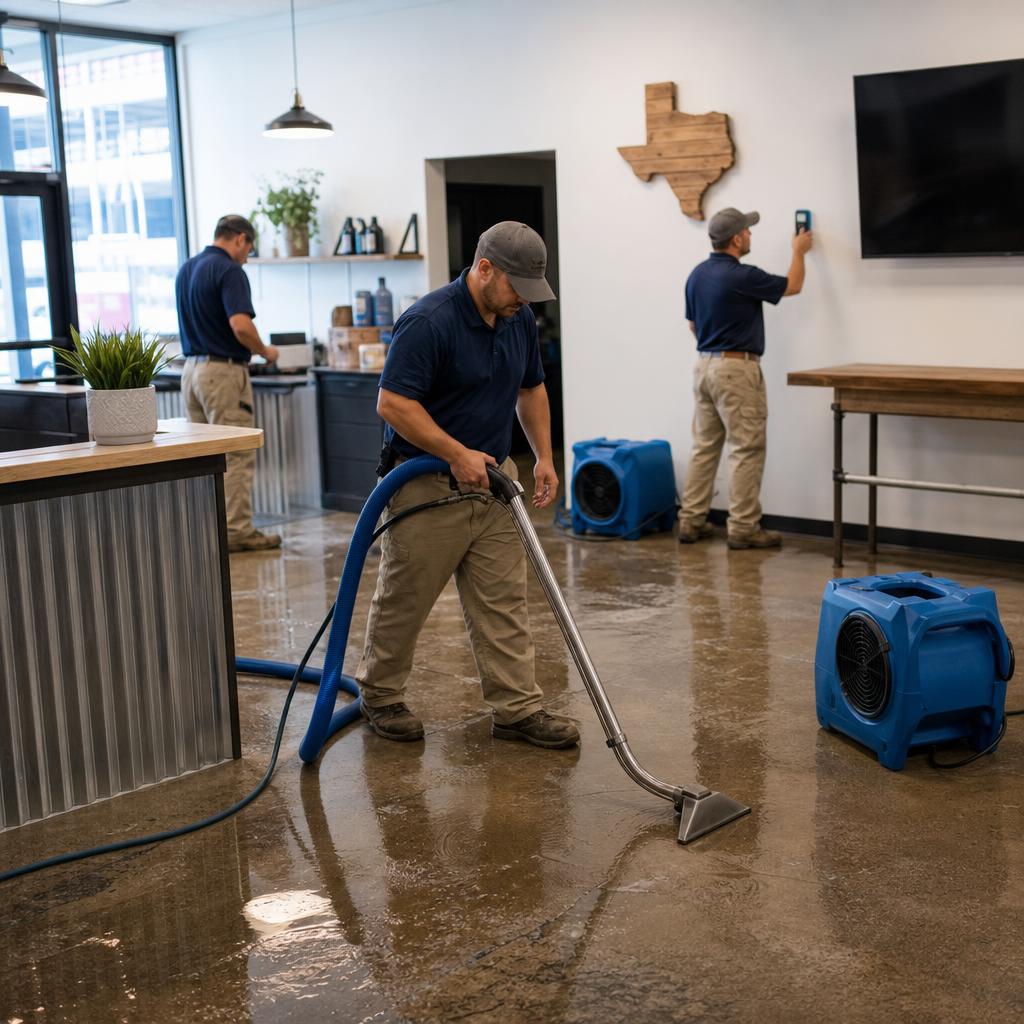
What to Know About Commercial Restoration
In a commercial property, a small ceiling stain can signal a roof, plumbing, sprinkler, or mechanical leak above a busy area. Other warning signs include flooring that changes color, musty storage rooms, condensation near equipment, repeated drain backups, or a sudden rise in humidity. Protecting people and inventory comes first, especially where water meets electrical systems or critical operations.
- Minimal business interruption
- Scalable commercial equipment
- After-hours service availability
- Coordination with property managers
- Large-loss expertise
Our Proven Process
1
Logistics
Rapid deployment of heavy-duty equipment.
2
Mitigation
Strategic extraction to isolate damage and keep unaffected areas open.
3
Drying
Commercial desiccant dehumidification.
4
Restoration
Expedited repairs to reopen your doors quickly.
How We Approach the Work
We establish a point of contact, map affected and unaffected zones, and plan extraction and drying around safe access and business priorities. Equipment is staged to limit disruption while moisture checks guide the work. We document conditions and communicate what is ready for use, what remains restricted, and which building trades may be needed for permanent repairs.
Property Considerations
Retail spaces, offices, restaurants, warehouses, schools, medical suites, and multi-tenant buildings have different contents, schedules, and ventilation systems. Stock, files, servers, production equipment, and tenant improvements need separate handling. Water above ceilings or in shared walls can affect neighboring suites, so access and communication should be planned before materials are opened.
What Owners Can Do Safely
Use the building’s emergency shutoffs only if trained and conditions are safe. Keep staff away from wet electrical areas, isolate inventory from standing water without walking through hazards, and preserve access for inspection. Record the source, time, affected zones, and operational constraints. Avoid moving heavy equipment or removing ceilings without coordinating a safe, documented plan.
A Clearer Path Forward
Commercial restoration balances mitigation with continuity, but the correct scope depends on the facility. We can discuss access, occupants, critical contents, and operating needs before equipment is placed. A written sequence of extraction, drying, cleaning, and repair decisions gives owners and managers a practical way to coordinate vendors, tenants, and insurance conversations.
Helpful Planning Details
Before the site visit, identify the facility contact, utility shutoffs, restricted rooms, and priority operations. Preserve a basic map of affected suites or departments and note equipment, inventory, or records that cannot be moved casually. Coordinate staff and tenant access through one point of contact, while keeping visitors away from wet floors, debris, and active equipment. Note critical rooms, delivery constraints, and any after-hours access rules. Include tenant contacts, alarm procedures, loading access, and vendor check-in requirements when they affect safe entry. A shared incident log can prevent duplicate moves and conflicting instructions.