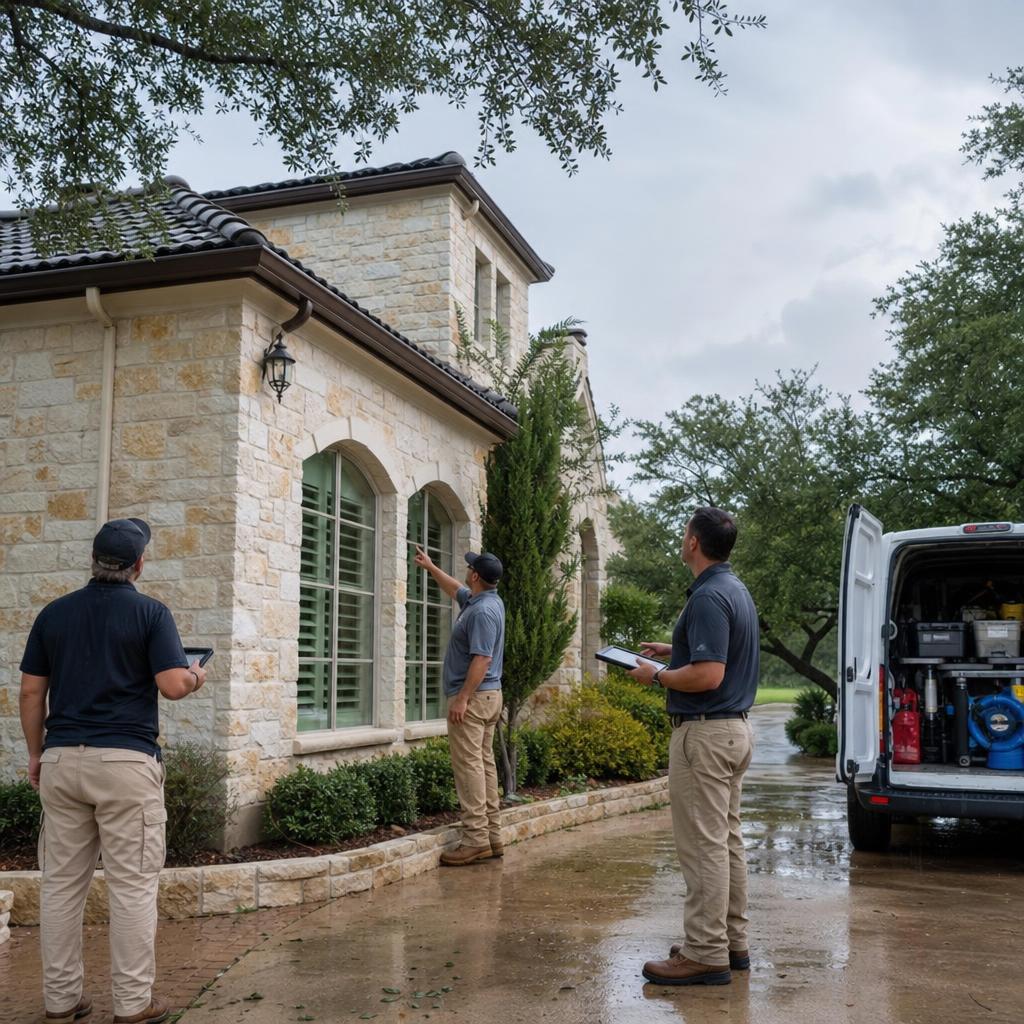
What to Know About Storm Damage Restoration
Storm damage may show as missing shingles, lifted flashing, broken glass, ceiling stains, wet insulation, wind-driven rain, or water beneath doors. Hail can damage roof surfaces without an immediate interior leak. Fallen branches and leaning fences can hide electrical or structural hazards. New drips after the storm, damp odors, and swollen trim deserve attention even when the sky clears.
- Emergency roof tarping
- Debris cleanup
- Water extraction
- Structural stabilization
- Comprehensive reconstruction
Our Proven Process
1
Emergency Tarping
Preventing further water intrusion from roof damage.
2
Water Mitigation
Extracting rainwater and drying the interior.
3
Debris Removal
Clearing fallen branches and ruined building materials.
4
Rebuild
Restoring the structure to withstand future weather.
How We Approach the Work
We start with a safe visual assessment and temporary measures that limit additional intrusion when appropriate. Water is extracted, affected materials are dried, and debris is separated from building contents. We document the apparent entry points and distinguish mitigation from later reconstruction. Moisture readings help guide equipment placement while roof or exterior repairs are coordinated separately when needed.
Property Considerations
Roof forms, attic insulation, vaulted ceilings, garages, detached structures, and commercial storefronts respond differently to wind and rain. Water can travel far from the point of entry before staining a ceiling. Contents near windows and exterior walls may need moving, and damaged electrical, HVAC, or insulation components should be evaluated before the space is returned to normal use.
What Owners Can Do Safely
Stay clear of downed lines, unstable trees, broken glass, and sagging ceilings. If safe, shut off water or electricity only from a dry location, place a container under an isolated drip, and use photos to record conditions. Do not climb onto a roof or use ladders during unsafe weather. Protect important documents from further exposure without disturbing hazardous debris.
A Clearer Path Forward
Storm recovery works best when temporary protection and drying begin before secondary moisture spreads. We provide a clear account of visible conditions, affected rooms, and recommended mitigation steps. Owners can then use that record when discussing exterior repairs and coverage, while the building receives attention based on observed damage rather than assumptions.
Helpful Planning Details
Photograph roof lines, ceilings, windows, and water paths from the ground or another safe location. Note whether rain is continuing and whether temporary protection has already been installed. Keep receipts and event details with the photographs, but do not climb, remove branches near lines, or make permanent repairs before hazardous conditions are evaluated. Mark rooms that are safe for occupants and keep water away from electronics and documents. A simple timeline of weather and new leaks is useful.