The FastDry Process
Restoration isn't just about vacuuming water. It requires a scientific approach to psychrometry and drying to ensure your property is truly safe.
What a careful restoration plan includes
A reliable process is more than removing the water that can be seen. In New Braunfels and Comal County, a loss may affect finished flooring, insulation, cabinets, drywall, contents, or areas that are not immediately visible. We use the inspection findings to determine priorities, explain access and equipment needs, and keep a record of the condition as work progresses. The steps below may overlap or change as new information is found.
1. Inspection & Assessment
Upon arrival, we immediately assess safety hazards and identify the source of the water. Using thermal imaging cameras and moisture meters, we map the exact extent of moisture intrusion behind walls and under floors.
2. Insurance Documentation
Before we move anything, we photograph and document the visible damage so you have organized records to share with your insurance carrier or adjuster.
3. Rapid Extraction
We deploy powerful truck-mounted and portable extraction units to remove standing water immediately, preventing further absorption into porous materials.
4. Structural Drying
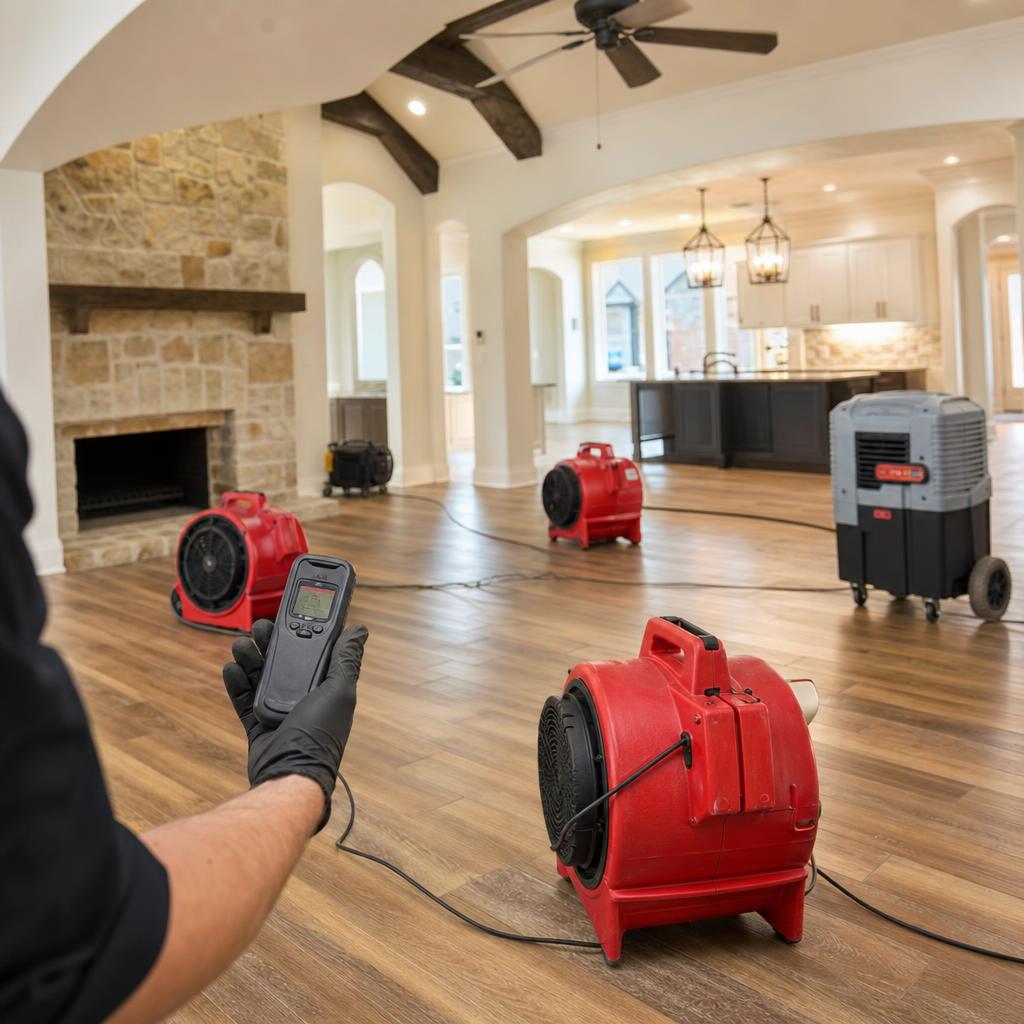
We install industrial-grade air movers and desiccant dehumidifiers to draw out deep, hidden moisture. We monitor moisture levels daily until the structure is completely dry to prevent mold.
5. Restoration & Rebuild
Once dry, we handle the reconstruction. From replacing drywall and flooring to painting and finishing, we return your property to its pre-loss condition.
Your part in the process
Before the crew arrives, share the source of the water, when it started, rooms that are affected, and any safety concerns. Keep children and pets away from wet or contaminated areas. If it is safe, preserve photographs and note damaged belongings, but do not delay an emergency response to create a perfect inventory.
Drying equipment can be loud and may need space, power, and access to the affected areas. We will explain what is being placed and what readings we are watching. When the structure reaches the appropriate drying condition, we discuss the handoff to cleaning, repair, or reconstruction rather than removing equipment simply because surfaces look dry.
Why documentation matters
Photos and notes create a useful timeline: what was affected at the beginning, what was removed or dried, and what condition remained at completion. Moisture readings help show where attention is needed and whether conditions are changing. This information can support conversations with an adjuster, landlord, property manager, or repair professional, although it does not replace your policy or their decisions.
A process can be methodical without being mysterious. We explain why equipment is needed, what access it requires, and what questions you should ask. If the source is uncertain, if materials cannot be dried in place, or if contamination changes the safety plan, we communicate that before proceeding whenever conditions allow.
The work may involve coordination with a plumber, electrician, building owner, insurer, or repair specialist. We identify those handoffs instead of presenting every problem as the same kind of cleanup. Our role is to help stabilize the property, document what happened, and make the transition to the next stage as clear as possible.
If conditions change during a project, the plan should change with them. We discuss new findings and practical options so you are not surprised by work that cannot be supported by what is actually present.
Need Emergency Assistance?
Our team is ready to respond immediately. Don't wait—water damage worsens over time. Call us now for immediate extraction and drying services.
Call (830) 218-1001 Now