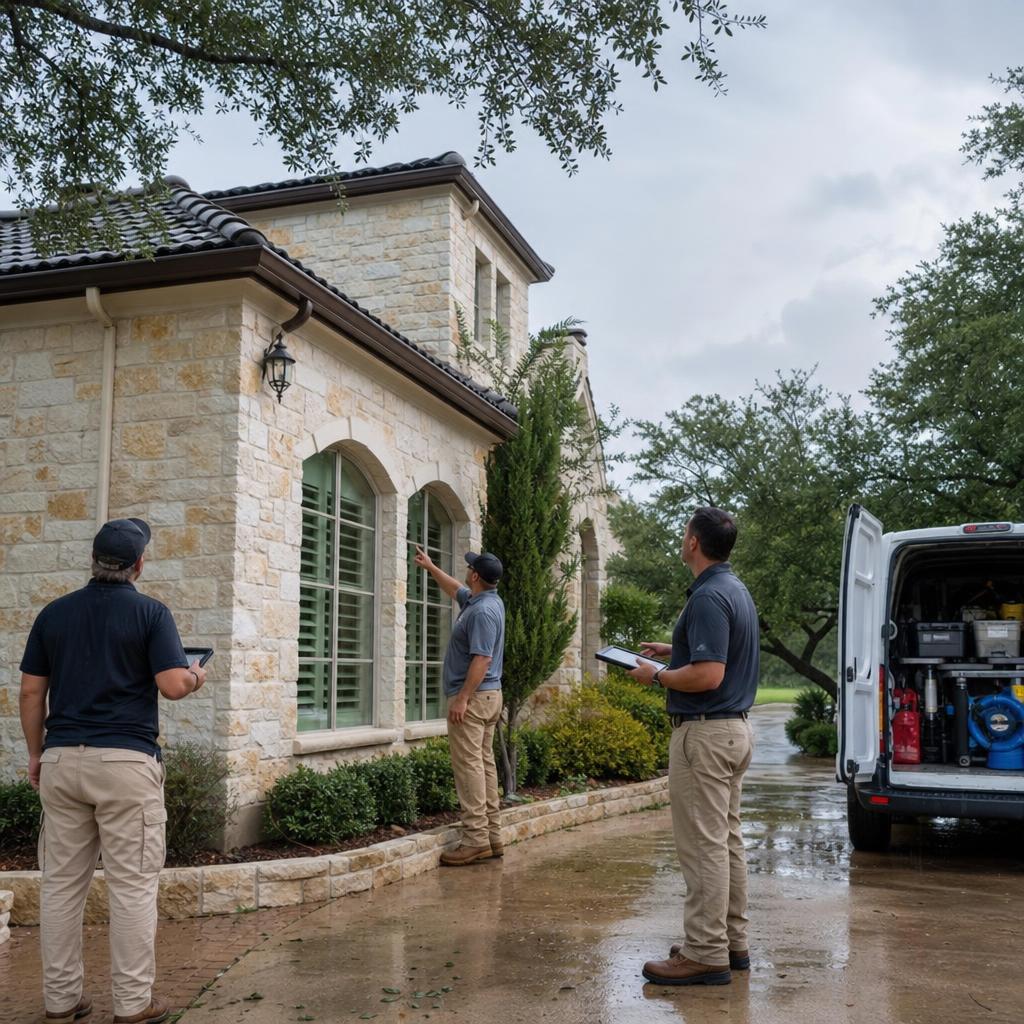
Water Damage in Spring Branch
Spring Branch stretches through a mix of Hill Country neighborhoods, acreage, businesses, and homes near the Guadalupe corridor. Long distances between rooms or detached structures can make a leak easy to miss, and uneven ground can direct stormwater toward low entrances. We trace the affected area carefully and tailor access and equipment placement to the property.
Common Local Water Risks
Heavy rainfall and drainage changes can affect garages, foundations, and lower rooms, while freezes, supply lines, water heaters, and septic or plumbing issues create indoor losses. Seasonal homes may not be checked often. Look for damp insulation, sediment, swollen trim, or a stale odor. Treat floodwater and any water near utilities as unsafe until evaluated.
Homes and Businesses We Serve
We work with ranch houses, cabins, manufactured homes, guest houses, vacation rentals, stores, offices, and workshops. Crawl spaces, pier-and-beam floors, stone, wood, and large porches can complicate drying. Detached buildings and stored tools or documents should be mentioned during the call, as they may require a separate inspection and safe route.
What to Expect
We confirm the source, access, and immediate hazards, then inspect visible and adjoining areas for moisture. Extraction, cleaning, and drying are selected according to the water and building materials. Readings guide equipment changes rather than an assumed timetable. Owners can expect clear questions about occupancy, pets, gates, contents, and which parts of the property must remain usable.
Coverage Throughout Spring Branch
Call to discuss a Spring Branch address, including rural properties and businesses along local corridors. FastDry provides extraction and drying plus flood, storm, sewage, mold, and fire-related mitigation. Service planning is based on the actual event and access conditions; the phone conversation helps identify safe owner actions while a response is arranged.
Planning for Service in Spring Branch
Tell us whether the property is on acreage, behind a gate, or includes multiple structures, and identify the safest available access. Note shutoff locations only if they can be reached safely. Keep children, pets, and livestock away from affected areas, and share details about wells, septic equipment, occupied rooms, or business operations before the inspection. Keep a short timeline of rainfall, plumbing changes, or odor, and do not move wet materials between detached buildings.